




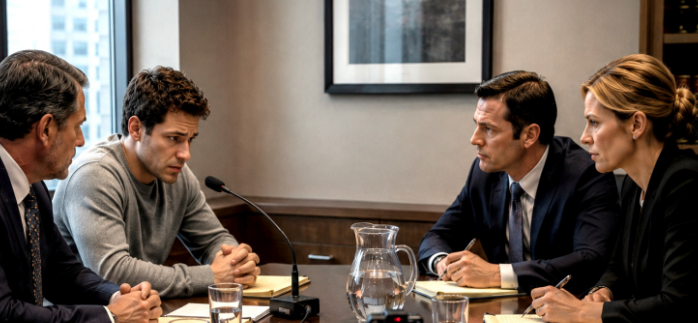
“Objection. That question calls for speculation. Only answer the question if you know. Don’t guess.” Every litigator has heard some version of that refrain.
Usually more than once. Sometimes dozens of times in a single deposition. And, invariably, the witness will provide a response of “I don’t know.” And everyone in the room knows what is happening.
The defending lawyer is not preserving objections. He is signaling to the witness how to answer. Prior to the deposition, the defense lawyer will instruct his witness that if she hears the magical words “if you know” or “don’t guess”, to always respond with “I don’t know.”
For too long, many of us have simply lived with it. We roll our eyes, make a note, and move on. We tell ourselves that the transcript will speak for itself, that the judge will understand later, or that fighting over every speaking objection will derail the deposition even more than the misconduct already has. But there comes a point where tolerating the behavior is not professionalism. It is surrender and not in the best interest of your client.
Cases are often won or lost in deposition. In medical malpractice cases especially, the deposition of a defendant physician may be the single best chance to pin down what happened, why it happened, what was reviewed, what was ignored, and how the physician explains away a bad outcome. When defense counsel repeatedly obstructs that process with speaking objections, coaching, and argumentative speeches, the harm is real.
At some point, the remedy is not another polite request to stop. It is to suspend the deposition and seek a motion for a protective order. And if the conduct is particularly egregious, it is a request for
appointment of a discovery referee.
It is Improper Conduct to Coach a Witness or Suggest an Answer
Under Los Angeles Local Rule 3.26 titled “Litigation Conduct” and Appendix 3.A, available at https://www.lacourt. org/courtrules/ CurrentRulesAppendixPDF/ Chap3Appendix3A.PDF the rules state: (e)(7) Counsel defending a deposition should limit objections to those that are No More “Don’t Guess”: Holding Defense Lawyers Accountable in Depositions By Benjamin Ikuta, Esq. & Michelle Hemesath, Esq. well founded and necessary for the protection of a client’s interest. Counsel
should bear in mind that most objections are preserved and need be interposed only when the form of a question is defective or privileged information is sought.
(e)(8) While a question is pending, counsel should not, through objections or otherwise, coach the deponent or suggest answers.
(e)(9) Counsel should not direct a deponent to refuse to answer questions unless they seek privileged information or are manifestly irrelevant or calculated to harass.
(e)(10) Counsel for all parties should refrain from self-serving speeches during depositions.
(e)(11) Counsel should not engage in any conduct during a deposition that would not be allowed in the presence of a judicial officer.
California Rule of Professional Conduct, rule 3.2 provides, “In representing a client, a lawyer shall not use means that have no substantial purpose other than to delay or prolong the proceeding or
to cause needless expense.” (Cal. R. of Prof. Conduct, rule 3.2.) California Rule of Professional Conduct, rule 3.4 provides, “A lawyer shall not… (a) unlawfully obstruct another party’s access to evidence… (b) suppress any evidence that the lawyer or the lawyer’s client has a legal obligation to reveal or produce… (c)… counsel or assist a witness to testify falsely….” (Cal. R. of Prof. Conduct, rule 3.4.) In Hobart v. Ford Motor Company (C.D. Cal., May 13, 2019, No. 218CV1893ABFFMX) 2019WL 3815721, the court sanctioned counsel for obstreperous conduct and coaching in deposition.
The court found, “[t] here can be no question that plaintiff’s counsel deliberately frustrated, delayed, and impeded Mr. Hobart’s deposition” when in approximately 60 instances, counsel “interposed objections that implicitly instructed Mr. Hobart how to answer.
Objections such as ‘Calls for speculation,’ ‘He is not qualified [to answer the question],’ ‘To the best of your knowledge,’ ‘Don’t guess,’ and ‘You can answer if you understand’ evidently signaled to Mr. Hobart that he should claim ignorance or confusion, no matter how simple the question.”
(Id. at *2.) The court in Hobart, supra, compelled a resumed deposition, with explicit restrictions on the objections counsel may interpose and for all costs incurred in the resumed deposition. (Id. at *6.) Likewise, as explained by the Rutter Guide, “Coaching a deponent or suggesting answers during a deposition, through unfounded objections or otherwise, may violate standards of professionalism and be sanctionable as a discovery misuse under CCP § 2023.010.” (Weil & Brown, The Rutter Group, Civil Procedure Before Trial, §8.736.1.)
As held in Stewart v. Colonial Western Agency, Inc. (2001) 87 Cal.App.4th 1006: “Objections to the competency of the deponent, or to the relevancy, materiality, or admissibility at trial of the testimony or of the materials produced are unnecessary and are not waived by failure to make them before or during the deposition. In other words, the deponent’s counsel should not even raise an
objection to a question counsel believes will elicit irrelevant testimony at the deposition. Relevance objections should be held in abeyance until an attempt is made to use the testimony at trial.” (Id.
at p. 1015.)
Suspend the Deposition, Seek a Protective Order, and the Appointment of a Discovery Referee at the Defendant’s Expense
Under Code of Civil Procedure section 2031.060, the Court has broad power to enter into a protective order to stop the offending conduct. In addition, “The court has power to appoint a referee to supervise the deposition, if necessary.” (Weil & Brown, The Rutter
Group: Civil Procedure Before Trial, §8:742.)
“Where either party anticipates that the other will try to frustrate legitimate discovery at a deposition (e.g. numerous, frivolous objections, or evasive answers), the referee’s presence can curtail such conduct.” (Id. at 8:743.) Code of Civil Procedure 639(a) provides that a court may “upon the written motion of any party, or on its own motion, appoint a referee…. (3) When a question of fact, other than upon the pleading, arises upon motion or otherwise, in any stage of the action.” (Cal. Code of Civ. Proc. §639(a), (a)(3).)
That said, plaintiff’s counsel should not reflexively suspend a deposition the moment defense counsel starts making speaking objections. Not every bad objection justifies blowing up the deposition. There is a balancing test, and it is a practical one. Unless the conduct is truly egregious from the outset, try to get at least some of the testimony you need before suspending. Do what you can to preserve momentum and obtain key admissions, because there is always the possibility that the judge later denies your motion or gives you less relief than you hoped for. If that happens, you do not want to be in a position where you walked away too early and came back empty-handed. In other words, do not be a hero and endure hours of coaching, but do not be so quick to suspend that you unnecessarily sacrifice important testimony.
The better approach in many cases is to make a clear record, repeatedly and professionally object to the misconduct, and continue long enough to secure the most critical testimony you can. Once it becomes clear that the defending lawyer’s conduct is materially impairing the examination and that further questioning is no longer going to be productive, then suspend the deposition. When you do, make the record unmistakably clear. State on the record that you are suspending the deposition due to counsel’s misconduct and that you will be seeking court intervention, including a protective order and other appropriate relief. That is important for a very practical reason: you do not want the defense later arguing that you voluntarily completed the deposition, waived the misconduct, or had all the opportunity you needed. Say expressly that the deposition is being suspended, not concluded, and that you are seeking a court order so there is no later claim that the examination was finished.
If the same lawyer represents multiple other deponents whose depositions are still coming up, it becomes even more important to move promptly. At that point, the issue is no longer limited to one ruined deposition. It is a preview of what will happen again and again unless the court intervenes. If you have additional depositions of the same lawyer’s clients on the horizon, a motion is often necessary not just to address the harm already done, but to stop future misconduct before it infects the rest of discovery. That was precisely the concern in one of our medical malpractice cases where the defense lawyer represented a hospital and, therefore, would represent multiple nurses at deposition. At the first deposition, he was rude, condescending, and engaged in much of the “don’t guess” coaching behavior. We filed a motion for a protective order and for appointment of a discovery referee at defendants’ expense.
The court did not grant everything we requested. The judge, who was frankly too nice, declined to appoint a referee and did not award monetary sanctions. But the motion still accomplished something important. The court gave a very clear and pointed rebuke to defense counsel and made plain that this conduct was improper and was not expected to occur again. After that hearing, the defense lawyer barely spoke on the record at any subsequent deposition.
The Court may order the parties to pay the referee’s fees “in any manner determined by the court to be fair and reasonable, including an apportionment of the fees among the parties. For purposes of this section, the term ‘parties’ does not include parties’ counsel.” (Cal. Code of Civ. Proc. §645.1.) Importantly, the party that is more at fault for the appointment of the referee should also bear the brunt of the costs. (See Marathon Nat. Bank v. Superior Court (1993) 19 Cal.App.4th 1256, 1260 [ordering that the defendant pay the entirety of the referee costs because “[b]ut for [the defendant’s]
hardball discovery tactics, these expenses would never have been incurred.”)
Where the need for a referee arises directly from one side’s obstructionist t a c t i c s — s p e a k i n g objections, coaching, improper instructions not to answer, and argumentative interruptions—the cost is Benjamin Ikuta, Esq. is a partner at Ikuta Hemesath LLP in Santa Ana, where he concentrates his practice entirely on medical malpractice. He has tried multiple medical malpractice cases to
verdict, is a member of ABOTA. Given the challenges of trying med mal cases, is proud of his .500 record in trial.
Michelle B. Hemesath, Esq. is the founding partner at Ikuta Hemesath LLP in Santa Ana, where she represents plaintiffs in complex medical malpractice cases. She approaches every case with a trial-first mindset. not a neutral litigation expense. It is a problem created by one side. And where one side creates the problem, fairness dictates that it should bear the cost of the solution. Nonetheless, point out the difficulties of your client being able to afford a discovery referee. On the other hand, explain that the defendant (and the defendant’s insurance carrier) are in a far better
position to afford to pay for such a referee.
Lastly, seek attorney fees. Such misconduct is a misuse of the discovery process warranting sanctions. (Code of Civ. Proc., §§ 2023.010, 2023.030; see also City of Los Angeles v. PricewaterhouseCoopers, LLP (2024) 17 Cal.5th 46, 67 [holding that the trial court has broad discretion to award sanctions for misuse of the discovery process.) For example, in Tucker v. Pacific Bell Mobile Services (2010) 186 Cal.App.4th 1548, the Court of Appeal held that it was proper for the trial court to award $7,500 in sanctions under Code of Civil Procedure sections 2023.010 and 2023.030 when the plaintiffs’ attorney improperly coached his client during deposition. (Tucker, supra, 186 Cal. App. 4th at p. 1560.)
Seeking a Protective Order and a Discovery Referee Can Create a Rift Between Defense Counsel and His Client/Carrier
Seeking a protective order and the appointment of a discovery referee is not
just about fixing a broken deposition. It also creates a very real—and often overlooked—pressure point on the defense side. When you file a motion detailing pages of speaking objections, coaching,
improper instructions not to answer, and disparaging comments, you are not just making a legal argument— you are creating a record. One that the defense lawyer has to explain to both the client and the insurance carrier.
Defense counsel now has to justify why a routine deposition turned into a motion for sanctions, a request for a referee, and potentially a court hearing criticizing their conduct. They have to explain
why their approach to defending a deposition created additional litigation, additional cost, and additional risk. And it is uncomfortable for defense counsel to attempt to bill for defending that motion. If the motion is granted, the problem becomes even more acute. Now the defense lawyer may have to explain why his client/carrier is being ordered to pay monetary sanctions or the exorbitant cost of a discovery referee to attend future depositions.
Again, even if the court does not award sanctions or appoint a referee, the mere filing of the motion can have a corrective effect. It forces the issue into the open. It signals to the defense that their conduct is being documented, challenged, and, if necessary, presented to the court. And it puts defense counsel in the position of having to defend not just the case, but their own behavior.
Ultimately, the goal is simple—hold defense counsel accountable when their conduct crosses the line and interferes with a fair deposition.
 (949) 229-5654
 Santa Ana

